
Grape Seed Extract - What to Know Before You Buy.
Pre-Press vs Post-Press Extraction: Efficiency & Potency
The timing of seed extraction during the winemaking process significantly influences the concentration and bioactivity of polyphenols in muscadine grape seed extracts.
| Extraction Type | Characteristics | Polyphenol Content | Efficiency & Quality |
|---|---|---|---|
| Pre-Press Extract | Seeds are separated prior to fermentation and pressing | Higher levels of intact polyphenols and OPCs | Greater potency, reduced degradation, superior antioxidant capacity |
| Post-Press Extract | Seeds recovered after fermentation and pressing | Reduced polyphenol levels due to oxidation and extraction into wine | Lower potency, partial depletion of active compounds |
During fermentation, polyphenols are partially extracted into the wine matrix and may undergo oxidation or structural changes. As a result, pre-press extraction typically yields a more concentrated and biologically active extract with higher antioxidant capacity.
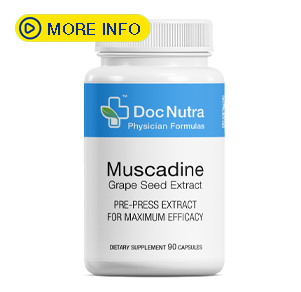
Muscadine grape seed extract, derived from Vitis rotundifolia, is a rich source of polyphenolic compounds, including proanthocyanidins, ellagic acid, and resveratrol-related compounds. This clinically inspired formulation is designed to support antioxidant defense, cardiovascular health, and cellular resilience in adults and seniors.
Muscadine Grape Seed Extract - Advanced Polyphenol Complex for Vascular, Cellular & Healthy Aging Support
Key Benefits
- Provides potent antioxidant protection against oxidative stress
- Supports vascular health and endothelial function
- Promotes healthy inflammatory balance
- Supports collagen integrity and connective tissue
- Helps maintain healthy aging and cellular resilience
- Supports metabolic and cardiovascular wellness
Botanical Profile & Active Compounds
Muscadine grape seeds contain a diverse array of polyphenols, including oligomeric proanthocyanidins (OPCs), flavonoids, and phenolic acids. These compounds contribute to strong antioxidant capacity and influence cellular signaling pathways related to inflammation, vascular function, and oxidative stress.
Compared to common grape species, muscadine grapes exhibit unique polyphenol profiles with high levels of ellagic acid and polymeric tannins.
Mechanisms of Action
Antioxidant Defense
Polyphenols in muscadine grape seed extract help neutralize reactive oxygen species (ROS), protecting cellular structures such as lipids, proteins, and DNA from oxidative damage.
PubMed: Grape seed polyphenols and antioxidant activity
Cardiovascular & Endothelial Support
Proanthocyanidins support endothelial function by enhancing nitric oxide availability and promoting vascular relaxation, which contributes to healthy circulation.
PubMed: Grape polyphenols and vascular health
Inflammatory Pathway Modulation
Polyphenolic compounds may influence inflammatory signaling pathways such as NF-κB and cytokine expression, supporting balanced immune and inflammatory responses.
Collagen & Connective Tissue Support
Proanthocyanidins help stabilize collagen structures and may inhibit enzymes that degrade connective tissue, supporting skin, joint, and vascular integrity.
Healthy Aging & Cellular Protection
Through combined antioxidant and signaling effects, muscadine grape seed extract supports mitochondrial function and cellular longevity.