
Choosing The Right Melatonin Formula For Better Sleep
Melatonin + Magnesium Glycinate
Synergistic Sleep Support Mechanisms
- Circadian Regulation: Melatonin supports sleep-wake signaling
- Neurotransmitter Balance: Magnesium supports GABA activity
- Muscle Relaxation: Magnesium supports neuromuscular calmness
- Enhanced Calm: Glycine supports relaxation and sleep quality
Why This Matters for Adults & Seniors
With age, melatonin production declines, and magnesium status may decrease, contributing to sleep disturbances and reduced relaxation. A targeted combination of melatonin with magnesium glycinate provides comprehensive support for sleep quality, nervous system balance, and overall nighttime recovery.
Why Take Magnesium with your Melatonin?
Magnesium supports over 300 enzymatic reactions, including those involved in ATP production, neurotransmitter regulation, and muscle relaxation. Glycine itself acts as an inhibitory neurotransmitter, promoting calmness and improved sleep quality.
Clinical Overview: Sleep & Mineral Form Selection
Melatonin regulates circadian rhythm and sleep-wake cycles, while magnesium glycinate supports neuromuscular relaxation and neurotransmitter balance. The form of magnesium used significantly influences absorption, tolerability, and clinical outcomes—particularly in adults and seniors.
Compare the difference between these two popular Melatonin formulas.
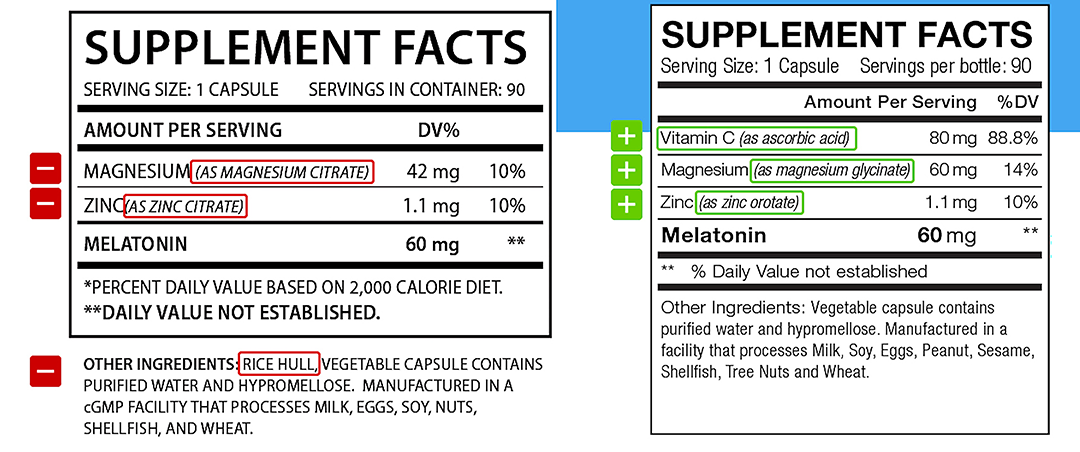
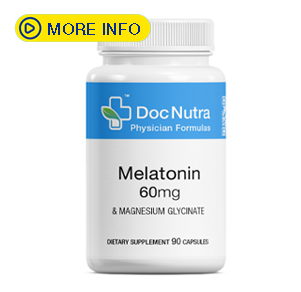
Melatonin + Magnesium Glycinate
Melatonin regulates circadian rhythm and sleep-wake cycles, while magnesium supports neuromuscular relaxation and neurotransmitter balance. The form of magnesium used significantly influences absorption, tolerability, and clinical outcomes—particularly in adults and seniors.
Key Benefits
- Supports healthy sleep onset and duration
- Promotes relaxation and calm nervous system activity
- Supports circadian rhythm regulation
- Enhances sleep quality without gastrointestinal discomfort
- Supports muscle relaxation and nighttime recovery
Clinical Insight: Magnesium Glycinate vs. Magnesium Citrate
Magnesium glycinate is generally preferred for sleep formulations due to its calming effects and superior tolerability, particularly in sensitive populations such as older adults.
Why Magnesium Glycinate vs Magnesium Citrate
| Feature | Magnesium Glycinate | Magnesium Citrate |
|---|---|---|
| Chemical Structure | Magnesium bound to glycine (amino acid chelate) | Magnesium bound to citric acid |
| Primary Function | Neurological calming and muscle relaxation | Osmotic laxative and digestive support |
| Absorption | Highly bioavailable, stable chelate | Moderate absorption, less targeted |
| Gastrointestinal Tolerance | Gentle, minimal laxative effect | May cause loose stools or GI discomfort |
| Sleep Support | Supports GABA activity and relaxation | Indirect, less targeted for sleep |
| Best Use Case | Sleep, stress, and nervous system support | Occasional constipation support |
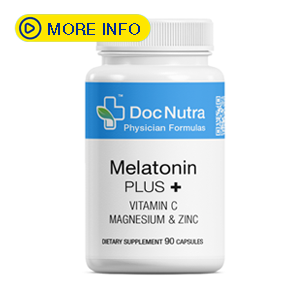
Melatonin + Vitamin C
Melatonin with Vitamin C supports natural sleep onset, improves sleep quality, and enhances overnight cellular recovery. Designed for adults and seniors, this dual-action formula helps optimize circadian rhythm while supporting antioxidant protection during sleep.
Why This Matters for Adults & Seniors
With aging, melatonin production declines and oxidative stress increases, often contributing to disrupted sleep patterns and reduced recovery. Vitamin C levels may also be suboptimal, further impacting immune and cellular function.
Clinical Overview: Sleep & Oxidative Recovery
Sleep is a critical period for physiological repair, including immune regulation, hormone balance, and antioxidant activity. Melatonin regulates the sleep-wake cycle, while also acting as a powerful endogenous antioxidant.
Vitamin C complements this process by supporting antioxidant defense and reducing oxidative stress, which may otherwise interfere with sleep quality and recovery—particularly in aging populations.
Melatonin + Zinc Orotate vs Zinc Citrate
Melatonin with zinc orotate to support circadian rhythm regulation, neurotransmitter balance, and restorative sleep. Designed for adults and seniors, this formula emphasizes enhanced mineral delivery and nighttime recovery.
Key Sleep Benefits
- Supports faster sleep onset and improved sleep latency
- Promotes deeper, more restorative sleep cycles
- Supports circadian rhythm and hormonal balance
- Enhances neurotransmitter function and relaxation
- Supports overnight immune and cellular recovery
Clinical Evidence: Melatonin + Zinc Orotate for Sleep
Clinical research demonstrates that combining melatonin with zinc orotate (and magnesium glycinate) significantly improves sleep quality, total sleep time, and overall well-being in older adults with insomnia.
Zinc Orotate vs Zinc Citrate
| Feature | Zinc Orotate | Zinc Citrate |
|---|---|---|
| Chemical Structure | Zinc bound to orotic acid (a nucleotide precursor) | Zinc bound to citric acid |
| Cellular Transport | May support intracellular mineral delivery via orotate pathways | Primarily systemic absorption without targeted transport |
| Bioavailability | High, with potential enhanced cellular uptake | Moderate to high, widely used form |
| Neurological Support | Supports neuronal signaling and cellular repair | General zinc support |
| Sleep Optimization | Supports melatonin function and neurotransmitter balance | Indirect support through zinc sufficiency |
| Tolerability | Typically well-tolerated at appropriate doses | Well tolerated; may cause mild GI upset in some individuals |
Clinical Insight:
While both forms provide essential zinc, zinc orotate is often selected in advanced formulations due to its theoretical advantage in facilitating intracellular delivery and supporting cellular metabolism—key factors in neurological and sleep-related pathways.
Other Ingredients:
One Formula wastes space with a filler, the Other uses that extra space to add the medicinal support of Vitamin C.
Always choose a supplement that avoids fillers, additives, flow agents, or preservatives whenever possible. Sometimes it is necessary to use these; however, more often, they are used to cut corners. Some common fillers, additives, and flow agents include Rice Hull, Rice Flour, Maltodextrin, Magnesium Stearate, MCC (Microcrystalline Cellulose)... Just to name a few.
| Feature | Efficacy of the Formula | Fillers, Additives, Flow Agents |
|---|---|---|
| Chemical Structure | No Value | Rice Hull |
| Primary Function | No Value | Fills space in a capsule |