
Pros & Cons of (PRP) Platelet Rich Plasma Therapy
Platelet-Rich Plasma (PRP) Therapy
Regenerative Medicine for Tissue Repair & Recovery
Platelet-Rich Plasma (PRP) therapy is an autologous regenerative treatment that utilizes concentrated platelets derived from a patient’s own blood to support tissue repair, healing, and recovery. PRP delivers growth factors and bioactive proteins directly to targeted tissues, supporting natural healing processes.
Key Clinical Applications
- Joint and musculoskeletal support (e.g., tendon and ligament injuries)
- Osteoarthritis symptom management
- Post-surgical tissue healing
- Hair restoration and dermatological applications
- Soft tissue regeneration and wound healing
Mechanism of Action
PRP contains a high concentration of platelets, which release growth factors such as platelet-derived growth factor (PDGF), transforming growth factor (TGF-β), and vascular endothelial growth factor (VEGF). These signaling molecules may support cellular proliferation, angiogenesis, and tissue remodeling.
The goal of PRP therapy is to enhance the body’s intrinsic healing response by delivering supraphysiological concentrations of regenerative mediators to target tissues.
Pros & Cons of PRP Therapy
| Category | Advantages (Pros) | Limitations (Cons) |
|---|---|---|
| Safety Profile | Autologous (from the patient's own blood), low risk of immune reaction | Minor risks: infection, bleeding, nerve irritation |
| Mechanism | Delivers growth factors that support healing and tissue regeneration | Mechanism not fully understood; variability in biological response |
| Clinical Outcomes | May reduce pain and improve function in some conditions | Mixed clinical evidence; not effective for all indications |
| Procedure | Minimally invasive, outpatient treatment | Requires multiple sessions; results are not immediate |
| Customization | Uses patient-specific biological material | Lack of standardization in preparation and protocols |
| Cost & Access | Non-surgical alternative to invasive procedures | Often not covered by insurance; can be costly |
Clinical Advantages
- Natural & Autologous: Uses the patient’s own blood components
- Minimally Invasive: Performed as an outpatient procedure
- Potential Healing Support: May enhance tissue repair and reduce recovery time
- Low Allergenic Risk: Minimal risk of immune reaction
PRP has shown promise in supporting healing in tendon injuries, joint conditions, and post-surgical recovery, with some patients reporting reduced pain and improved mobility.
Clinical Limitations
- Variable Effectiveness: Outcomes may differ depending on condition and patient factors
- Limited High-Quality Evidence: Some clinical trials show inconsistent or modest results
- Not FDA-Approved for Most Uses: Considered investigational in many applications
- Cost Considerations: Typically not covered by insurance
- Multiple Treatments Required: Benefits may require repeated injections
Research findings are mixed, with some studies demonstrating benefit while others show limited or no significant improvement in certain conditions such as osteoarthritis.
Safety Considerations
- Generally well tolerated due to autologous origin
- Possible side effects: soreness, bruising, swelling at the injection site
- Rare risks: infection, tissue damage, nerve injury
- Not recommended for certain medical conditions (e.g., platelet disorders)
Although PRP is considered relatively safe, complications such as infection or injection-site discomfort can occur, particularly in higher-risk individuals.
Why This Matters for Adults & Seniors
Age-related decline in tissue repair capacity, increased inflammation, and degenerative joint conditions may contribute to slower healing and reduced mobility. PRP therapy offers a regenerative approach that may support recovery and functional improvement in select individuals.
However, careful evaluation of clinical evidence, patient-specific factors, and treatment goals is essential before pursuing PRP therapy.
Professional Guidance
PRP therapy should be administered by qualified healthcare professionals using standardized protocols. Patients are encouraged to discuss risks, benefits, and alternative treatment options with their provider.
Scientific References
Consensus:
Boosting your platelet count can be beneficial. However, there are supplements you can take to boost (RBC's) Red Blood Cells and Platelets.
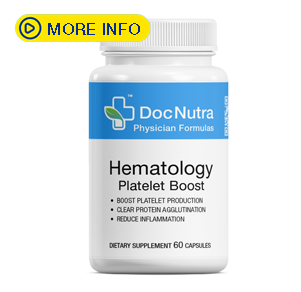
Natural Ingredients that boost platelet production.
Papaya Leaf Extract (Carica papaya)
Papaya leaf extract has been extensively studied for its potential to support platelet production and hematologic recovery. Bioactive compounds such as flavonoids, phenolic acids, and alkaloids appear to support thrombopoiesis and erythropoiesis.
Experimental research demonstrates that papaya leaf extract significantly increased both platelet counts and red blood cell counts in animal models, suggesting potential benefits in supporting healthy blood cell production. Clinical observations also indicate that papaya leaf extract may increase platelet levels and reduce complications associated with thrombocytopenia.
Spirulina (Arthrospira platensis)
Spirulina is a nutrient-dense blue-green microalga rich in iron, amino acids, phycocyanin, and essential vitamins that support red blood cell production and oxygen transport. Clinical research has shown that spirulina supplementation significantly improved serum iron levels and anemia parameters in adults, supporting hematologic health.
Preclinical studies also demonstrate that spirulina supplementation may increase hemoglobin and red blood cell counts while supporting immune function.
Glutathione
Glutathione is the body’s master intracellular antioxidant and plays a vital role in protecting red blood cells from oxidative damage. Adequate glutathione levels support cellular detoxification, immune function, and the stability of erythrocyte membranes.
Research suggests that antioxidant systems involving glutathione help maintain red blood cell integrity and protect hemoglobin from oxidative stress.
Bromelain (Pineapple Stem Extract)
Bromelain is a proteolytic enzyme complex derived from pineapple that supports circulatory health and inflammatory balance. Bromelain has been shown to influence platelet activity and improve blood rheology, contributing to healthy circulation.
Research demonstrates that bromelain can modulate platelet aggregation and improve blood flow dynamics, supporting vascular health.
Papain
Papain, a proteolytic enzyme naturally present in papaya, assists in protein digestion and nutrient assimilation. Improved digestion supports the absorption of amino acids and micronutrients required for red blood cell synthesis and immune function.
Benefits for Adults and Seniors
- Supports healthy platelet levels
- Promotes red blood cell production and oxygen delivery
- Supports energy levels and vitality
- Helps protect blood cells from oxidative stress
- Promotes immune and circulatory health
Summary - Things to consider before treatment.
Question - Which is better? Localized PRP or IV PRP treatments?
Answer - Localized PRP treatments have a well-documented history of success when administered with Ultrasound Guided Injections by a trained health professional.
Answer - Systemic IV PRP treatments are more experimental and have mixed results.
Side note - The body takes about 3 to 5 days (roughly 72 hours to 5 days) to generate new platelets from stem cells in the bone marrow and release them into the bloodstream. Humans produce approximately 100 billion platelets daily, which generally live for 7 to 10 days before they are destroyed and replaced.
Question - If you have 100 billion platelets, and you draw 20 million from your body to be separated, extract the PRP, and reintroduce it through an IV one hour later, how many platelets do you have in your system?
Answer - Best to use simple math: 100 billion minus 20 billion, plus 20 billion equals = 100 billion.
This is why some health professionals are skeptical of Systemic IV (PRP) Platelet Rich Plasma Therapy.